
5 Ways To Strengthen Your Ankles

They get very little attention but they are so important. Flexible ankles enable you to run, jump, dance, and walk with ease. If your humble joint starts to grumble, it will make it difficult to get around the house.

Alexandra Page, MD is an orthopedic surgeon who specializes in the foot- and ankle surgery.

Ankle sprains happen all the time, with approximately 25,000 occurring each day. If you suspect you have suffered one, consult a doctor immediately and stop engaging in any activity until your injury is resolved.

What happens if your ankle hurts but you don’t have an injury? This is the advice of David Geier MD, an orthopedic surgeon who specializes in sports medicine.

If you feel that your injury is preventing you from doing the things you love, get it checked. Geier says that a stress fracture could be if you feel pain in any of your bones. The injury could get worse if you continue to train.

You may be able to manage ankle pain from arthritis and tendonitis by strengthening your muscles and stretching. These 5 easy, effective exercises can help keep your ankles healthy.

1. Peroneal Stretching/Strengthening

Page says that the peroneal tendon runs along the outside of your ankle and is crucial for strength. For athletes–particularly runners, dancers, and those who play ball sports, she recommends spending a minute to warm up these tendons.

This is a simple move: Roll onto your outside feet for 60 seconds. Page states that this helps to improve flexibility and strength. “This also improves proprioception–awareness of where your ankle is and what it’s doing–which can help prevent ankle sprains.”

2. Ankle Circles

This will increase the strength of the muscles around your ankle and improve the stability of the joint. Place your right leg straightening on a chair. Your right foot should be moved clockwise from 10 to 20 times. After resting your leg for five seconds, raise your leg and continue moving your foot counterclockwise. Do 3 to 4 sets.

Paula Xavier is a personal trainer at NYC’s Naturally Intense and a three-time winner of the Best of Manhattan Awards for personal training. You can move your foot upward and downward (like pressing a gas pedal) or sideways (like windshield wipers). These movements will increase your range of motion. For 3-4 sets, do 10-20 reps.

3. Dorsiflexion Stretch

Although it’s a large term, dorsiflexion is simply a way to bring your toes closer together with your shin. This will protect your ankle muscles and tendons.

Place your right leg straight on the ground, and the left to cross in front of yourself. Your left foot’s sole should be against your right leg. Wrap a towel or band around your right foot’s ball and pull your toes toward you.

Xavier says you’ll feel the stretch in your calf, thighs, and Achilles tendon. For 15 seconds, hold the stretch. Continue the stretch at least four times and then switch sides.

Xavier warns, “This shouldn’t feel painful.” It should feel mild to moderate.

4. Write the Alphabet

Xavier says that tracing the alphabet with your big foot is a difficult strength exercise for your ankle. Sit in a chair and extend your right leg out in front. Use your big toe as a “pen” and write the alphabet in all capital letters. Next, use lower case letters. Switch feet and continue.

5. Achilles Stretches

Page cautions you that an age-related change in the Achilles tendon could increase the risk of it rupturing at the back of your foot. Regular Achilles stretching can help improve flexibility.

Standing straight up, extend one leg behind you, keeping the back leg straight (grounding your heel) and pushing your hips forward. Then, bend the knee of the front foot at a 45-degree angle while standing. Keep this position for between 15-30 seconds, then switch legs. Repeat 2 to 4 sets with each leg.

What Causes Stabbing Heel Pain? Find Out How To Treat It

Plantar Fasciitis

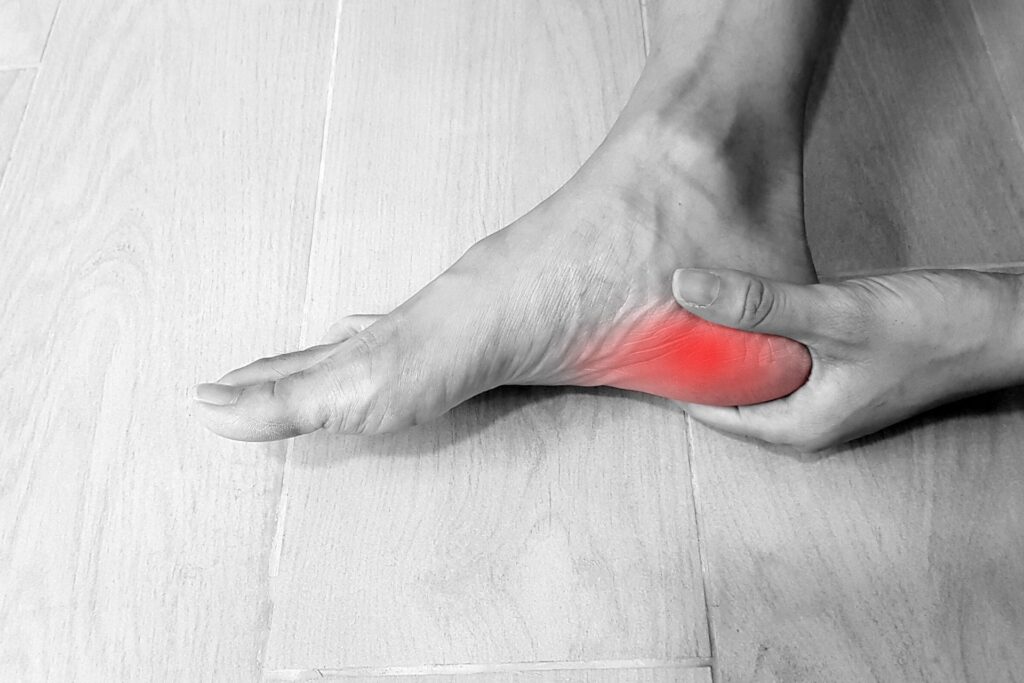
Have you ever felt a shooting pain in your heel when you get out of bed each morning? You may also experience unbearable heel pain after sitting for a long time. Plantar fasciitis is a condition that causes heel pain after sitting for long periods of time. You don’t have to go under the knife, your pain can be managed with noninvasive treatments. Let’s look at this condition and discuss your options for pain relief.

What is the Plantar Fascia?

The plantar fascia, which is found on the bottom of your feet, is a thick band made up of tissue that runs from your heel bone to your toes. This fascia is a vital support system for your feet when you are active. This band acts as a bow that absorbs shock and provides support for both your feet during dynamic movement. It’s pretty amazing, right?

Plantar Fasciitis: What Happens

This fascia can become inflamed or overuse, which can lead to heel pain. Plantar fasciitis is extremely common in runners due to its support role through movement. However, other active adults can also get it, with the risk increasing for those over 40.

What causes plantar fasciitis, you ask? Small tears can form when the fascia band becomes too stressed and overworked. These small tears can cause plantar fasciitis, which causes a stabbing heel sensation and irritation. Although the pain may subside a little with “warming up” the foot, it will return to its original state after prolonged periods of sitting and the first thing in the morning.

Plantar fasciitis is not only a problem for runners and athletes. People who are more flat-footed or have higher arches than average have the same heel pain. Because of the foot mechanics that have to work harder to evenly distribute weight, this can cause some people to experience a stabbing heel.

Plantar fasciitis may also be caused by repeated jumping in dance, exercise, and those who have to stand all day or are obese.

How to Relieve Plantar Fasciitis Pain

Plantar fasciitis pain can be managed with conservative treatment over a few months. The first step is to rest the foot or feet more than usual. To give your feet and fascia a rest, you might need to reduce your exercise or switch to something else. Sitting can be incorporated into your daily routine if your job keeps you on your feet. Ice can also be applied to the affected areas, which has been reported by many.

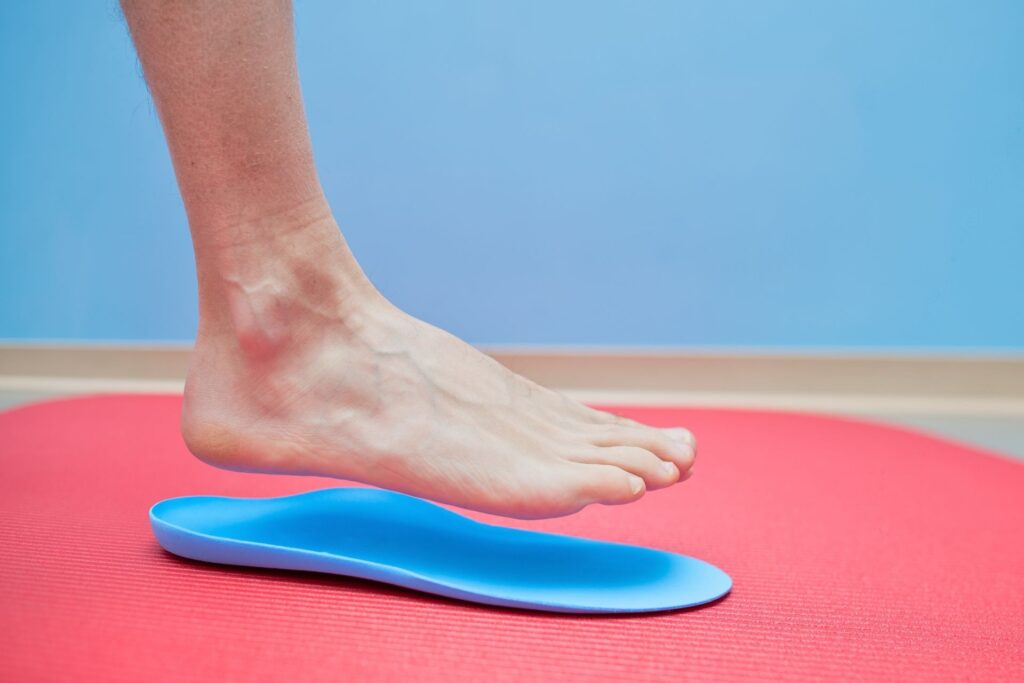
You can also stretch the plantar fascia lightly. However, excessive stretching can cause more damage to the fascia. You should not overdo it with aggressive foot stretching, even if your goal is to keep your feet healthy. Some people find relief by using a foot splint, or orthotics in their footwear.

Chiropractic Treatment

Chiropractic treatment can be used to treat plantar fasciitis pain. Adjustments to the spine can reduce inflammation and help you heal from plantar fasciitis. You can reduce inflammation by having your feet adjusted, as well as other adjustments to the extremities. This will help you keep your healing process on track. To speed up your recovery, your chiropractor can help you to recommend the best exercises for you at home.

Over 200,000 Nerve Endings In Each Foot

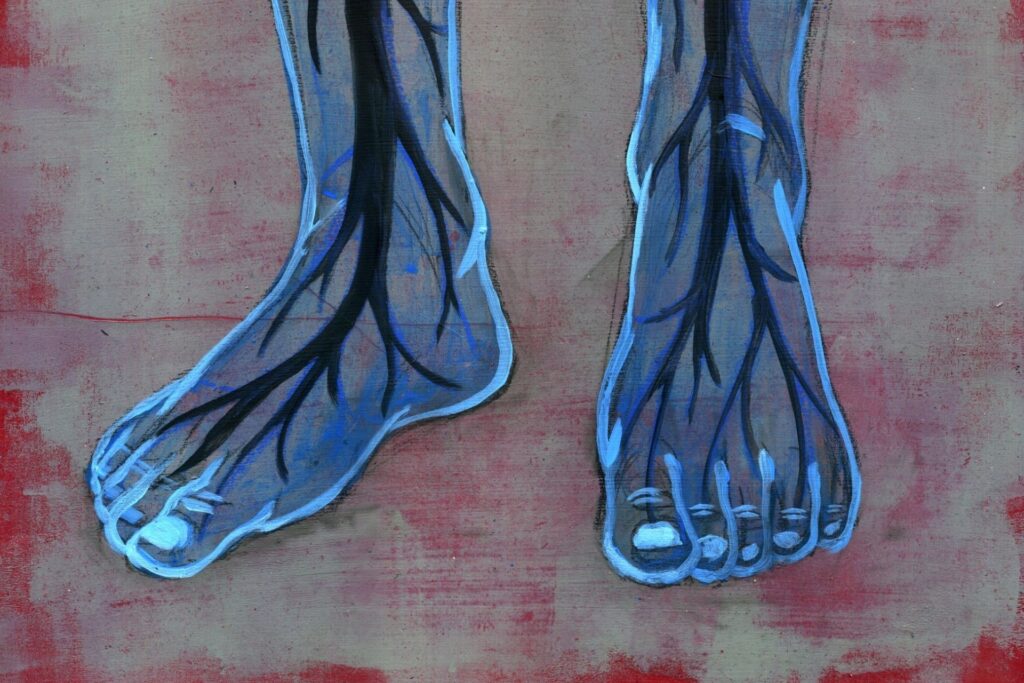
Our feet are often thought of as a pair of awkward, smelly, embarrassing attachments to our legs that only hold us upright. But they’re amazing. They act as our internal radio and transmit information to our brains every step we take, believe it or not, there are over 200,000 nerve endings in each foot!

It is possible because our feet contain a large network of touch receptors and nerve endings that make them sensitive to different stimuli like pressure, temperature, vibrations, or pain. After the receptors have been activated, a series of nerve impulses are sent to your brain.

Standing and walking, your sole foot is the only part in contact with the ground.

Although standing may seem simple, our nerves relay so many impulses to maintain our balance. It’s this constant feedback system that links our soles to our brains and then sends signals back to the muscles.

The sensory information from your feet does not protect you from injury. However, the messages your brain receives through nerve impulses will send messages to your muscles to adjust your gait to protect your bones and joints.

This amazing nerve network transmits this information continuously and takes milliseconds to reach your brain. Your brain then responds by making adjustments to your legs, back, and arms.

over 200,000 nerve endings in each foot by steady gait clinic in scarborough

We all know that there are five basic senses –sight and hearing, smell, taste, and touch. These allow us to perceive the world around us. Our ability to sense the location of our bodies in space is crucial to allow us to move normally and to know where we are.

You can touch your nose even with your eyes closed. The brain receives information from the sense organs of our muscles and joints that tell it when and where our limbs are moving. It also knows how tight our muscles should be.

The sixth sense, or “proprioception”, includes the senses of movement and position of our limbs as well as the senses for muscle force and effort, and balance. This incredible feedback from the nerves allows us to do our daily activities without even thinking about it.

Our feet are often seen as simple levers that allow us to walk. However, our feet are flexible and subtle tools that allow us to do extraordinary things when they are encased in our shoes.

Everything To Know About Ankle Sprain

What is an ankle sprain?

Many people have broken an ankle in their lifetime. If your ankle becomes swollen or painful after twisting it, it is most likely that you have sprained it. This is a sign that you may have torn the ligaments around your ankle.

Ankle sprains can be common but they aren’t always serious. People who have suffered repeated or severe sprains may experience long-term joint pain and weakness. A sprained ankle can be treated to prevent future ankle problems.


What causes ankle sprains?

Most types of ankle sprains occur when your foot is planted and you make a fast-shifting motion with it. This happens when you play soccer or are tackled in football. The foot often rolls inwards and the ankle rolls outwards. The ligaments around the ankle can become stretched and torn. The ankle will roll inwards less often and the foot will turn outwards. This causes injury to the ligaments inside the ankle.

A mild or severe ankle sprain could vary depending on the severity of the injury and the number of ligaments involved. An ankle sprain can cause swelling, tenderness, and stiffness. It usually feels stable and can be walked with minimal pain. An ankle sprain can cause swelling and tenderness, which can make walking difficult. An ankle injury that causes instability can cause the ankle to feel “wobbly” and make it difficult to walk. The ankle may give out, and you will not be able to walk.


What are the signs?

Most sprains are felt right away at the injury site. The ankle may swell and become bruised. It is often tender and painful to touch the ankle.

You may feel a pop, snap, or tear in more severe sprains. At first, you may feel extreme pain and not be able to walk or put weight on your feet. The more severe the ankle sprain, the longer it will take for it to heal.


What is the best way to diagnose an ankle sprain?

Your doctor will ask about the circumstances of your injury and whether you have ever injured your ankle before. Your doctor will examine your ankle, foot, lower leg, knee, and hip to determine if there are any injuries.

Sometimes, the doctor might order X-rays in order to make sure there are no broken bones in the foot or ankle.

What is the best way to treat it?

You can often first try the RICE approach to your ankle.

  • R est. You might need crutches until your legs are strong enough to walk on their own.
  • I ce. Apply an ice pack every hour for at least the first 24 hours, or until the swelling subsides. Keep a thin piece of cloth between your skin and the ice, and apply the ice pack to all areas.
  • C impression. A compression wrap such as a Tensor Bandage or elastic compression wrap will reduce swelling. It should be worn for 24 to 36 hours. Compression wraps don’t offer protection. If you put any weight on your ankle, you will also need a brace.
  • E Levation. If possible, raise your ankle to the level of your heart for at least 2 to 3 hours each day. This will reduce swelling and prevent bruising.

You may be able to reduce swelling and pain by taking an over-the-counter pain reliever, such as naproxen or ibuprofen if you don’t take prescription pain relievers.

Ankle sprains can be treated with proper rehabilitation exercises. An ankle sprain that is not treated properly can cause instability and chronic pain. This can lead to a weak ankle and make it more likely that you will be reinjured. It’s best to wait until your ankle is able to move again before you start returning to activities or other activities that place stress on your ankle. Your ankle can be protected by wearing a brace or taping it. Hiking boots and other high-tops, lace-up shoes may be helpful. Be careful. If you are experiencing pain or discomfort, don’t force your foot in a boot.

Your doctor may recommend surgery if your ankle remains unstable or has severe ligament damage.


Which type of rehabilitation program should I follow?

After an injury, you can start rehabilitation exercises. It is possible to walk and put weight on your feet. You might need crutches until your foot is able to walk normally. You can also do a range of motion exercises with ice on your ankle, depending on how severe your pain is. You can do these exercises by simply tracing the alphabet with your foot. This allows the ankle to move in all directions.

Talk to your Foot Care specialist about any other rehabilitation options. Balance exercises, strength training, stretching, and strengthening the ankle may all help to heal it completely.

The Common Causes Of Foot Pain

Most people will experience foot pain at some point in their lives. You will likely experience some foot pain at times, whether it is from a sprain, cramping, or stepping on something sharp. Sometimes, however, foot pain may be an indication of something more serious and should be treated immediately.

Our feet are one of the most durable parts of our bodies. They can withstand many strenuous activities such as running, jumping, and kicking. Our feet are able to withstand the stress and impact without too much trouble, but they can also get hurt.

We will be discussing some common causes of foot discomfort in this article. This information is not meant to replace proper medical care. Make an appointment with a professional if you have severe foot pain.

The first question you should ask when discussing foot pain is Where are you having foot pain?

Toe Pain

Toe pain can be caused by a variety of conditions. Toe pain can often be secondary to other conditions like diabetes, arthritis, hyper-pronation, and hyper-pronation. Here are some common examples:

  • Osteoarthritis is often a cause of pain in the large toe joints.
  • Diabetes can cause peripheral neuropathy (numbness or pain in the extremities) and may also lead to diabetes.
  • Hyper-pronation and ‘flat feet’ are common causes of hallux valgus (bent big tip).

You may also experience toe pain from conditions such as gout, hammertoe, mallet toe, and other issues. Or, you might simply feel cramped by your shoes.

Toe pain can be caused by many different causes. It is important to seek professional advice to determine the cause and to ensure you are following the right treatment plan.

Ball Of Foot Pain

The ball of your feet is the forward pad under your toe joints. Also known as the “forefoot”, it’s located beneath your toe joints.

Metatarsalgia is the most commonly used medical term when discussing foot pain. Metatarsalgia is any pain that occurs in the area of the metatarsal head, which is primarily the ball of your foot.

Metatarsalgia can be used to describe a variety of conditions.

  • Morton’s Neuroma, (Nerve Inflammation).
  • Sesamoiditis (Joint Inflammation)
  • Capsulitis (Joint Inflammation)
  • Stress Fractures
  • Plantar Plate Tears
  • More

There are many causes of metatarsalgia, depending on the particular condition. Poor-fitting footwear, inappropriate footwear selections, excessive loading or stress on your forefoot, as well as abnormal biomechanics (i.e. over-pronation, Morton’s toe, etc. ).

The second cause of pain in the ball of your foot may be severe calluses. These can be caused by poor alignment, pathomechanical feet, or too much friction and stress on the ball.

Pain In The Arch Of Foot

The arch or sole of your foot is one of the most common causes of foot pain.

The plantar fascia is a connective tissue band that runs from your heel to the bottom of your foot. These tissues are very sensitive and can easily be strained. approximately 10% of people will experience this type of foot pain at some point in their lives.

Plantar fasciitis is the most common condition that causes pain in either the arch or sole of the feet. This refers to any condition which affects the plantar fascia and causes them to become strained, or inflamed. This condition is often associated with heel pain (see below).

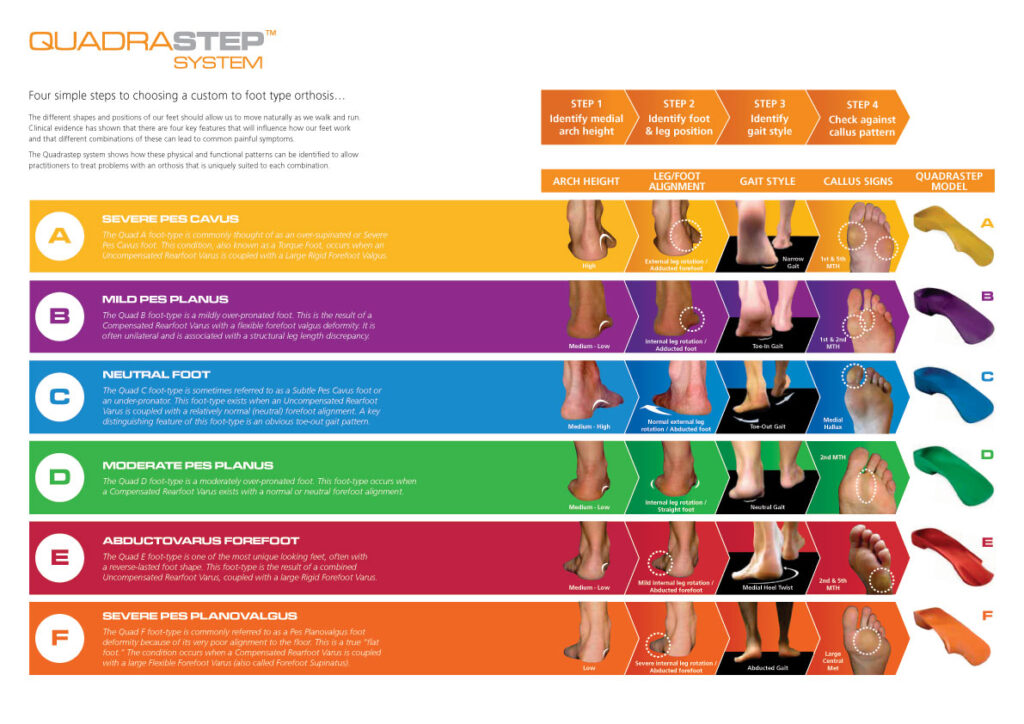
A longitudinal arch collapse in one’s foot can cause arch pain. This is due to biomechanical problems such as hyper-pronation and over-pronation. This condition commonly referred to as “flat feet”, can contribute significantly to plantar fasciitis.

Pain in the Heel of Your Foot

Heel pain can occur in various parts of your heel and may be linked to many conditions.

  • Plantar fasciitis: Besides affecting the arch of your foot, plantar fasciitis can also cause inflammation in the heel and front of the heel.
  • Calcaneal fat pad: Calcaneal oil fat pads: These fat pads are found in the middle part of your heel and provide cushioning. This fat pad can become bruised from jumping or falling hard, causing pain in the middle portion of your heel.
  • Achilles tendon: The Achilles tendon connects your calf muscles and your heel bone. This pain is usually located in your heel or back of the calf. It is also known as Achilles tendonitis. This is a condition that causes inflammation of the tendon. It’s usually caused by repetitive strain in that area.


A professional should be consulted if you have pain in your heel. You should not ignore heel pain. It can lead to further problems.