

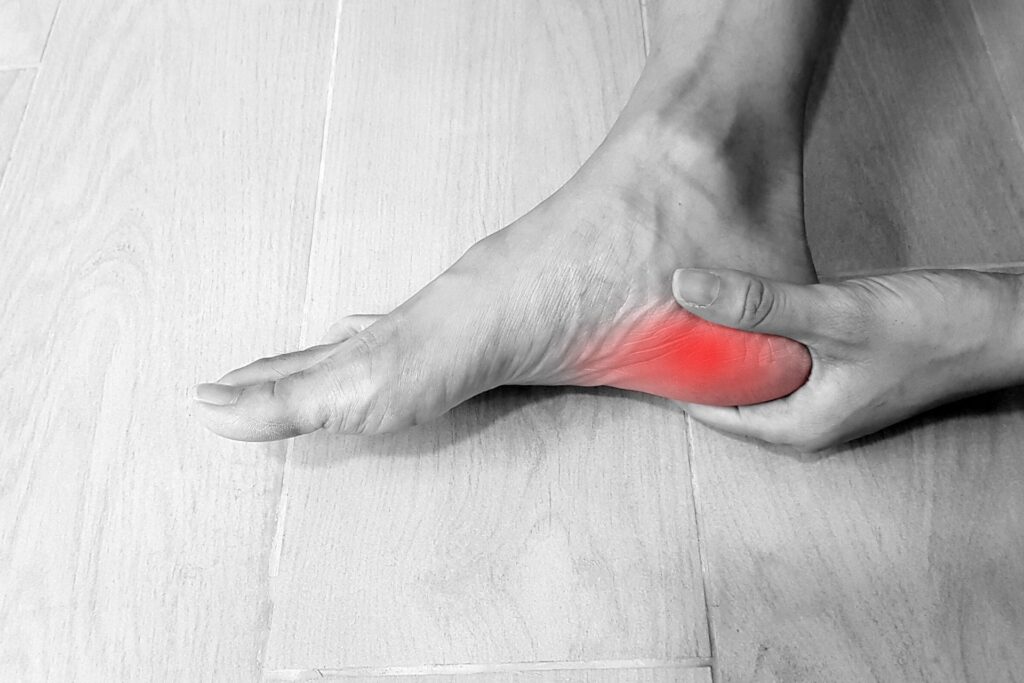
Have you ever felt a shooting pain in your heel when you get out of bed each morning? You may also experience unbearable heel pain after sitting for a long time. Plantar fasciitis is a condition that causes heel pain after sitting for long periods of time. You don’t have to go under the knife, your pain can be managed with noninvasive treatments. Let’s look at this condition and discuss your options for pain relief.
What is the Plantar Fascia?
The plantar fascia, which is found on the bottom of your feet, is a thick band made up of tissue that runs from your heel bone to your toes. This fascia is a vital support system for your feet when you are active. This band acts as a bow that absorbs shock and provides support for both your feet during dynamic movement. It’s pretty amazing, right?
Plantar Fasciitis: What Happens
This fascia can become inflamed or overuse, which can lead to heel pain. Plantar fasciitis is extremely common in runners due to its support role through movement. However, other active adults can also get it, with the risk increasing for those over 40.
What causes plantar fasciitis, you ask? Small tears can form when the fascia band becomes too stressed and overworked. These small tears can cause plantar fasciitis, which causes a stabbing heel sensation and irritation. Although the pain may subside a little with “warming up” the foot, it will return to its original state after prolonged periods of sitting and the first thing in the morning.
Plantar fasciitis is not only a problem for runners and athletes. People who are more flat-footed or have higher arches than average have the same heel pain. Because of the foot mechanics that have to work harder to evenly distribute weight, this can cause some people to experience a stabbing heel.
Plantar fasciitis may also be caused by repeated jumping in dance, exercise, and those who have to stand all day or are obese.
How to Relieve Plantar Fasciitis Pain
Plantar fasciitis pain can be managed with conservative treatment over a few months. The first step is to rest the foot or feet more than usual. To give your feet and fascia a rest, you might need to reduce your exercise or switch to something else. Sitting can be incorporated into your daily routine if your job keeps you on your feet. Ice can also be applied to the affected areas, which has been reported by many.
You can also stretch the plantar fascia lightly. However, excessive stretching can cause more damage to the fascia. You should not overdo it with aggressive foot stretching, even if your goal is to keep your feet healthy. Some people find relief by using a foot splint, or orthotics in their footwear.
Chiropractic Treatment
Chiropractic treatment can be used to treat plantar fasciitis pain. Adjustments to the spine can reduce inflammation and help you heal from plantar fasciitis. You can reduce inflammation by having your feet adjusted, as well as other adjustments to the extremities. This will help you keep your healing process on track. To speed up your recovery, your chiropractor can help you to recommend the best exercises for you at home.